
Nearly Half of Medicare Beneficiaries Have Prediabetes — and Most Don’t Know It
The diabetes prevention program Medicare covers is one of the most valuable — and most overlooked — benefits available to older adults today.
Here’s the quick answer:
- The Medicare Diabetes Prevention Program (MDPP) is a free, structured lifestyle program for Medicare Part B enrollees with prediabetes
- It includes 22 sessions over 12 months focused on healthy eating, physical activity, and weight management
- It is covered at no cost — no deductible, no coinsurance
- It is available in-person, live online, or through self-paced online modules
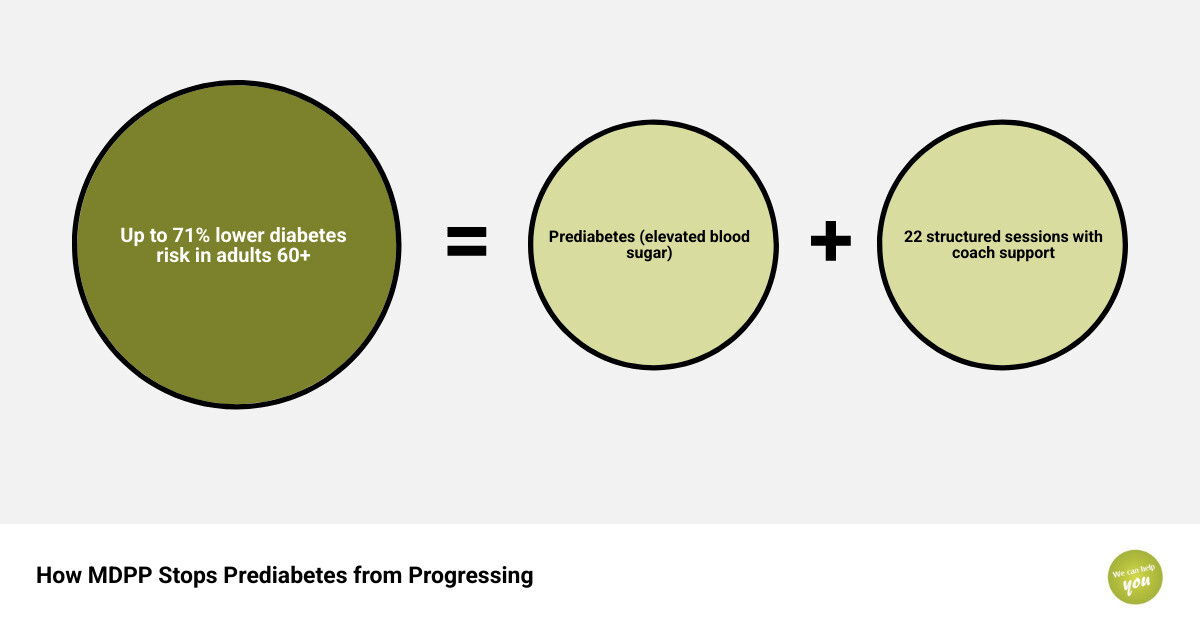
- Research shows it can reduce type 2 diabetes risk by up to 71% in adults age 60 and older
Nearly 1 in 2 adults aged 65 and older have prediabetes. Yet most have no idea. Without action, prediabetes often progresses to type 2 diabetes — a disease that costs Medicare an estimated $205 billion annually and leads to serious complications like heart disease, kidney failure, and vision loss.
The good news? Progression is not inevitable.
A structured lifestyle program — delivered through trained coaches, group support, and proven curriculum — can stop prediabetes in its tracks. And Medicare pays for the whole thing.
Whether you are newly enrolled in Medicare, helping a parent navigate their benefits, or simply trying to make the most of what you have paid into for decades, this guide explains everything you need to know.
Quick diabetes prevention program medicare definitions:
What the diabetes prevention program medicare benefit is and how it works
The Medicare Diabetes Prevention Program, usually called MDPP, is a Medicare Part B preventive benefit designed to help people with prediabetes avoid or delay type 2 diabetes.
In plain English: Medicare pays for coaching, education, accountability, and support before diabetes starts causing expensive trouble.
The program is based on the evidence behind the National Diabetes Prevention Program and the original Diabetes Prevention Program research. CMS expanded it as a covered Medicare service because lifestyle intervention was shown to improve health and lower spending.
MDPP is not a gym membership, a fad diet, or a lecture series where everyone nods and then goes home to a cookie tray. It is a structured behavior-change program led by trained lifestyle coaches, usually in a group setting, with regular weigh-ins, activity tracking, and practical goal setting.
What the Medicare Diabetes Prevention Program includes
For most beneficiaries, the core MDPP benefit includes:
- 16 core sessions during the first 6 months
- 6 maintenance sessions during months 7 through 12
- A CDC-approved curriculum
- Coaching on healthy eating
- Physical activity goals
- Stress management and habit-building
- Weight tracking and progress monitoring
- Group support from others working on similar goals
Medicare pays for up to 22 MDPP sessions in a 12-month period.

Sessions are designed to help participants make realistic changes they can actually live with. That usually includes eating patterns that support modest weight loss, moving more, and building routines that last longer than New Year’s resolutions.
How the diabetes prevention program medicare benefit helps lower diabetes risk
The main target is usually losing at least 5% of starting body weight and working toward 150 minutes of physical activity per week.
Those goals matter because the evidence is strong. In the original Diabetes Prevention Program study, lifestyle intervention reduced diabetes incidence by 58% overall. Among adults age 60 and older, the reduction was even greater at 71%. Research also found that each kilogram of weight loss was associated with a 16% reduction in diabetes incidence. You can review the science here: Scientific research on lifestyle intervention.
That does not mean everyone must become a marathon runner or live on lettuce. It means even moderate, steady changes can make a major difference.
Why this benefit matters for older adults
This benefit matters because the stakes are high:
- Nearly 1 in 2 adults age 65 and older have prediabetes
- More than a quarter of people over age 65 already have diabetes
- Diabetes is the most expensive chronic disease in the United States
Among older adults, diabetes-related medical care has been estimated at about $13,240 per person per year, compared with about $820 for someone with prediabetes. That means preventing progression can produce potential savings of roughly $12,420 per person per year.
There is also evidence that the National DPP can save money quickly. One estimate found average savings of $1,456 per Medicare beneficiary within just 1 year of participation.
In short, MDPP is not just about weight. It is about protecting health, independence, mobility, and retirement income from a disease that is often preventable.
Who qualifies, what it costs, and how to enroll
Medicare does not open this benefit to everyone automatically. There are specific eligibility rules.
Who is eligible for the diabetes prevention program medicare coverage
In general, you may qualify if all of the following apply before your first session:
- You are enrolled in Medicare Part B
- Your body mass index is at least 25, or at least 23 if you are Asian
- You have a qualifying blood test within the past 12 months
- You have never been diagnosed with type 1 or type 2 diabetes, except a history of gestational diabetes
- You do not have End-Stage Renal Disease
Qualifying blood test results include:
- Hemoglobin A1c of 5.7% to 6.4%
- Fasting plasma glucose of 110 to 125 mg/dL
- 2-hour plasma glucose of 140 to 199 mg/dL after an oral glucose tolerance test
If you are unsure whether you meet these numbers, your doctor can help review your lab work.
How much the program costs for beneficiaries
For eligible beneficiaries, MDPP costs $0.
That means:
- No deductible for the MDPP service
- No coinsurance for the MDPP service
- No copayment for covered MDPP sessions
This is one of Medicare’s preventive services, which is why there is no cost-sharing when you qualify and use an approved supplier. For a broader look at no-cost prevention benefits, see More info about Medicare preventive care.
An important update for 2026: CMS guidance indicates the old once-per-lifetime enrollment limit has been removed, which may allow repeat participation if you again meet program rules. Because implementation details can matter, it is wise to confirm current eligibility when you enroll.
How to get started and find a supplier
A simple way to start is:
- Ask your doctor whether you have prediabetes.
- Review your recent A1c or glucose test results.
- Confirm you have Medicare Part B.
- Search for an approved MDPP supplier near you or online.
- Enroll and attend your first session.
A physician referral can help, but beneficiaries should also use official tools to verify current options. Start with Medicare coverage details. You can also call 1-800-MEDICARE.

If you use Medicare Advantage, check with your plan first to confirm any network or enrollment requirements.
Delivery options, telehealth updates, and what changed through 2029
One of the biggest changes to the diabetes prevention program Medicare benefit is flexibility. It is no longer limited to a traditional in-person classroom.
In-person, live virtual, and asynchronous formats explained
Depending on supplier availability, MDPP may be offered in:
- In-person group sessions
- Live virtual distance learning sessions
- Fully asynchronous online modules
In-person means everyone meets at the same site.
Distance learning means sessions happen live online in real time, usually by video platform.
Asynchronous means participants complete approved online content on their own schedule rather than logging in for a live class.
All formats must still follow Medicare and CDC program rules. The curriculum must remain approved, and the program still focuses on behavior change, weight tracking, and physical activity.
A major operational change is that suppliers no longer need to maintain an in-person site to offer the program online through the current flexibility period.
2026-2029 policy updates beneficiaries should know
CMS has extended major virtual flexibilities for MDPP. According to Medicare Diabetes Prevention Program (MDPP) Expanded Model | CMS:
- Distance learning remains allowed through at least December 31, 2027
- Asynchronous online delivery is covered through December 31, 2029
- Virtual-only suppliers may participate
- Beneficiaries may self-report weight for remote sessions under current rules
For remote sessions, self-reported weight generally must be submitted within 5 days of the session, using approved methods such as:
- Live video
- Date-stamped photos
- Smart scales that securely transmit weight
These updates matter because they make it easier for beneficiaries to participate from home.
Why virtual delivery may improve access
Access has been a major MDPP problem. Research found that 39% of Medicare beneficiaries would need to travel more than 50 miles to attend a single session at their nearest location. That is a big ask for a weekly lifestyle class, especially if you no longer enjoy night driving, winter weather, or parking lots built by people who clearly dislike knees.
Virtual delivery can help people who face:
- Rural distance barriers
- Transportation issues
- Mobility limitations
- Caregiving responsibilities
- Anxiety about in-person groups
- Scheduling problems
It may also be more realistic than many people assume. As of 2021, about 75% of older adults used the internet, 64% had broadband at home, and 61% owned a smartphone.
How effective MDPP is, plus the biggest participation barriers
The program works, but participation has lagged behind its potential.
What the latest outcomes show
CMS evaluation data through March 2024 found:
- 9,015 total Medicare beneficiaries participated between April 2018 and March 2024
- Average attendance was 18 of 22 sessions
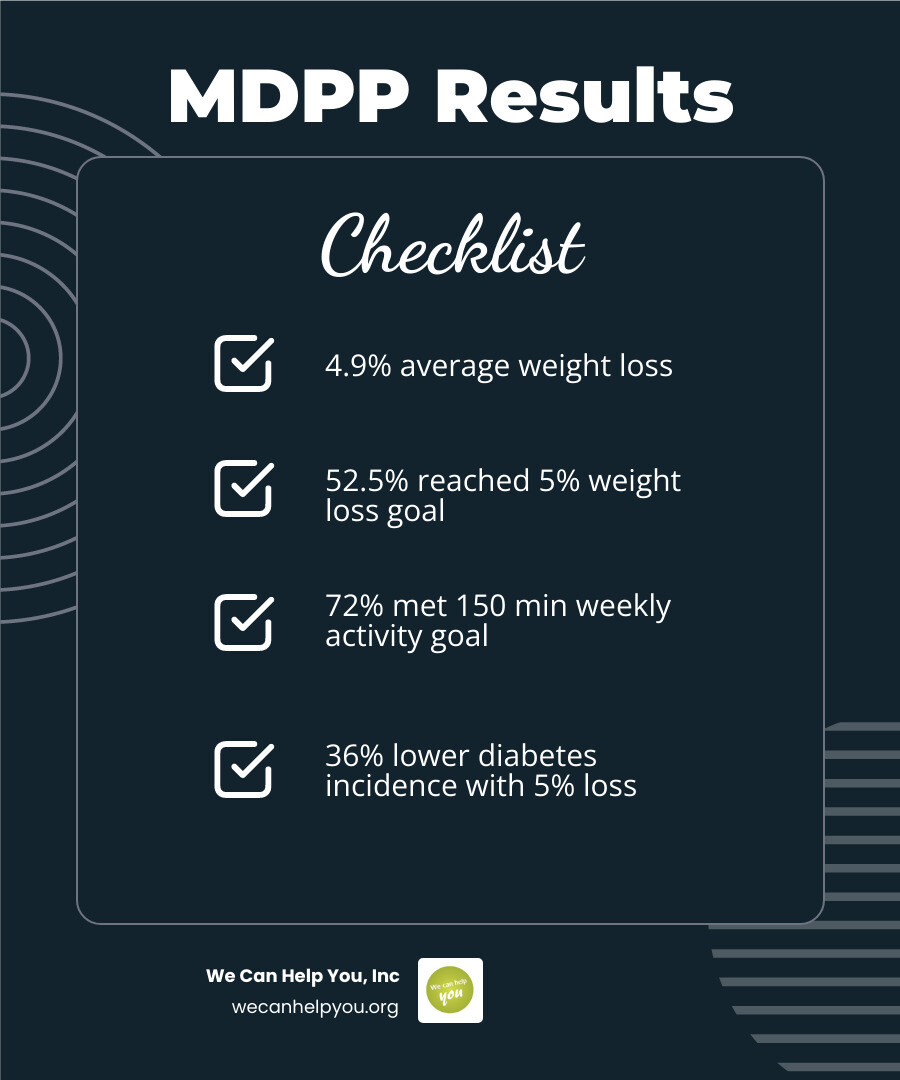
- Average weight loss was 4.9% of starting body weight
- 52.5% achieved at least 5% weight loss
- 24.2% achieved at least 9% weight loss
- 72% reached the 150-minute weekly activity goal by Session 22
- Beneficiaries who reached 5% weight loss had a 36% lower rate of diabetes incidence
Those are meaningful outcomes. They suggest MDPP is doing what it was built to do: help participants lose enough weight and build enough activity to reduce risk.
Telehealth results and real-world effectiveness
Virtual delivery has also shown strong results. In 2021, 221 beneficiaries who participated in at least two sessions via telehealth had average weight loss of 6.1%, which was better than several earlier in-person cohorts. More broadly, Medicare beneficiaries who attended at least two MDPP sessions had average weight loss of 5.1%.
The official evaluation also found virtual use surged during the public health emergency and then remained a substantial part of program delivery. By late 2023, many participants were still receiving services primarily virtually or in mixed formats. More details are available in the Evaluation of the Medicare Diabetes Prevention Program (MDPP) | RTI.
Main barriers and how to address them
If MDPP is effective and free, why has participation been relatively low?
Common barriers include:
- Low awareness among beneficiaries
- Missed referrals from primary care offices
- Limited local supplier availability
- Transportation problems
- Technology discomfort
- Hearing, vision, or dexterity challenges
- Competing caregiving or health demands
Practical ways to improve participation include:
- Screening for prediabetes during routine care
- Clear referrals from doctors and specialists
- Simple enrollment instructions
- Tech support for virtual participants
- Closed captioning and larger on-screen text
- Easy-to-use devices and platforms
- Family or caregiver support for setup and reminders
Health equity and access for underserved populations
MDPP also has an equity challenge. One evaluation found 77% of participants were white, suggesting that minority and underserved communities may be underrepresented.
That matters because diabetes risk is not evenly distributed, and access barriers can be worse in communities facing:
- Lower broadband access
- Less transportation
- Fewer local suppliers
- Language barriers
- Lower awareness of Medicare preventive benefits
- Less trust in health systems
Better equity strategies include culturally adapted curriculum, partnerships with community-based organizations, accessible digital design, trusted local outreach, and simpler referral pathways.
Medicare Advantage coverage and what suppliers need to know
MDPP is not just for people in Original Medicare.
How Medicare Advantage plans cover MDPP
Medicare Advantage plans are required to offer the MDPP benefit to eligible members. However, plans may have their own network arrangements, enrollment steps, and provider verification rules.
That means beneficiaries in Medicare Advantage should:
- Contact the plan before enrolling
- Confirm the supplier is accepted by the plan
- Ask whether a referral is required
- Verify any plan-specific process for participation
For more background on preventive benefits under Medicare, visit More info about Medicare preventive services.
Requirements to become an MDPP supplier
Organizations that want to offer MDPP must meet Medicare and CDC requirements. In general, they need to:
- Obtain CDC Diabetes Prevention Recognition Program recognition, such as preliminary or full recognition
- Enroll in Medicare as an MDPP supplier
- Use PECOS or the CMS enrollment process
- Maintain an administrative location
- Submit a roster of coaches and required identifiers
- Follow documentation, curriculum, and reporting rules
Suppliers are not limited to physician practices. Community-based organizations, health systems, and other approved entities may qualify if they meet program standards.
Payment structure and reimbursement basics
MDPP uses a mix of attendance-based and performance-based payment.
Historically, research often cited a maximum reimbursement around $755 per beneficiary. Updated 2026 CMS guidance reflects different rates depending on delivery format:
- Up to $822 for in-person or distance-learning delivery
- Up to $624 for fully online asynchronous delivery
CMS payment uses HCPCS codes including:
- G9886 and G9887 for attendance in in-person or distance-learning formats
- G9880 for achieving 5% weight loss
- G9881 for achieving 9% weight loss
- G9871 for online delivery
- Additional maintenance-related billing codes and rules may apply
Suppliers must keep detailed records on attendance, weight, curriculum content, and claims. Record retention requirements are lengthy, so this is a real administrative program, not a casual wellness class.
Frequently Asked Questions about diabetes prevention program medicare
Can I join MDPP if I already have diabetes?
No. You are not eligible if you already have type 1 or type 2 diabetes. A prior history of gestational diabetes does not automatically disqualify you.
If you already have diabetes, Medicare may still cover other diabetes-related services, such as screenings, self-management training, supplies, and medical nutrition therapy.
How many sessions does Medicare pay for?
Medicare pays for up to 22 sessions over 12 months under the standard first-year structure:
- 16 weekly core sessions in the first 6 months
- 6 monthly maintenance sessions in months 7 through 12
Attendance matters because progress and reimbursement are tied to participation and outcomes.
Can I take the program online if I live far from a site?
Yes, if an approved supplier offers distance learning or asynchronous online delivery. Medicare’s current flexibilities allow both live virtual and self-paced online options through the current testing periods. Remote participants may also be allowed to self-report weight under CMS rules.
Conclusion
The diabetes prevention program Medicare covers may be one of the smartest benefits available to older adults in 2026. It is free for eligible beneficiaries, grounded in strong evidence, and designed to help stop type 2 diabetes before it starts.
If you think you may qualify, here are the next steps:
- Check whether you have Medicare Part B
- Review your most recent A1c or glucose results
- Confirm your BMI meets the program threshold
- Search for an approved local or online supplier
- Ask your doctor about prediabetes and MDPP enrollment
At We Can Help You, Inc., we believe prevention belongs in every retirement plan right alongside budgeting, Social Security timing, and Medicare decisions. A healthier retirement is usually a less expensive one too.
To keep learning about preventive benefits, visit More info about Medicare preventive services. If you want help understanding how Medicare fits into your retirement picture, explore our education resources and planning guides as your next step.