Why Choosing the Right Medicare Plan Advisor Can Make or Break Your Retirement Coverage
A Medicare plan advisor is a licensed professional who helps you understand your Medicare options, compare plans, and enroll in the coverage that best fits your health needs and budget — at no cost to you in most cases.
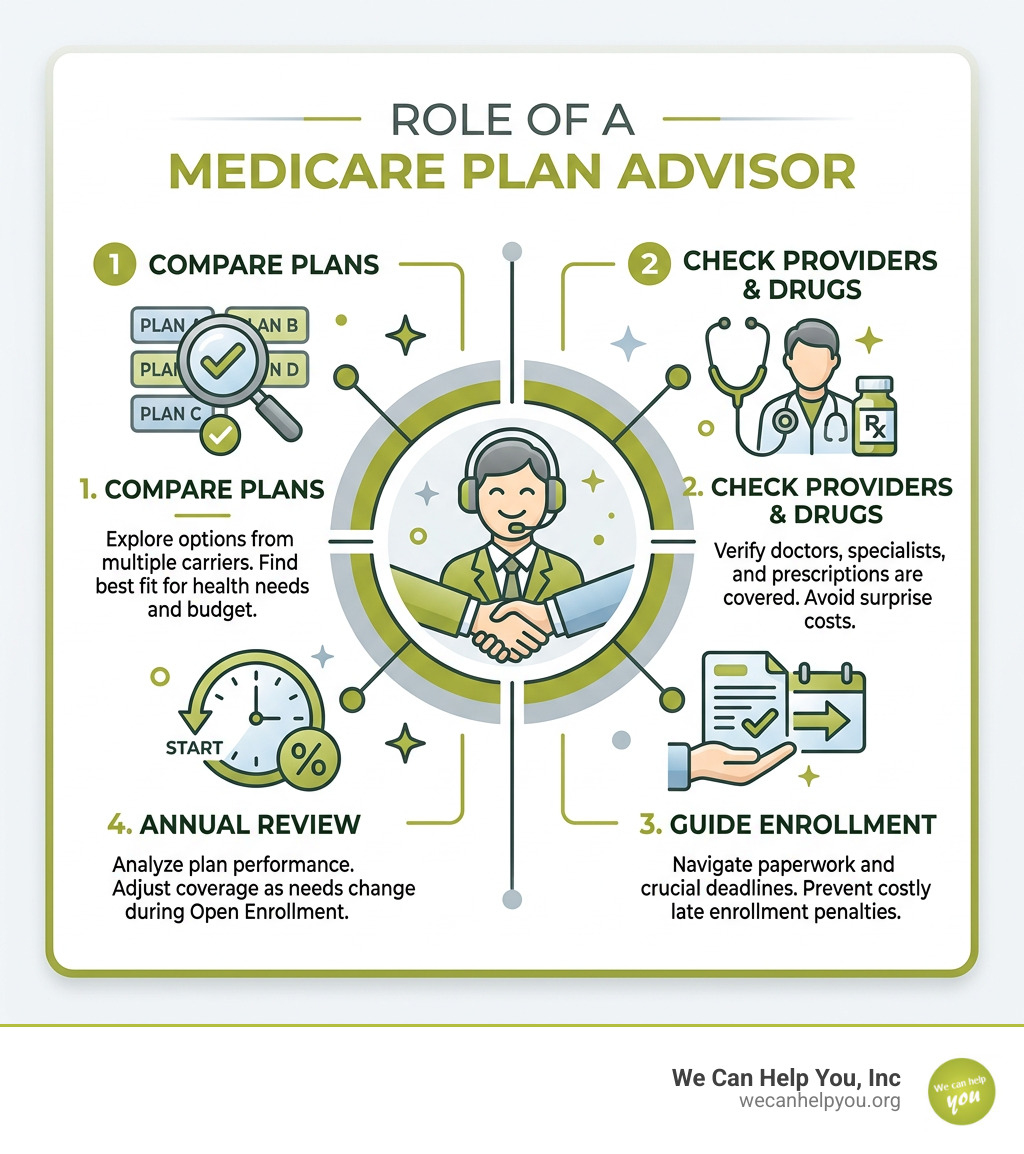
Here’s what a Medicare plan advisor can do for you:
- Compare plans across multiple insurance carriers
- Check that your doctors and prescriptions are covered
- Guide you through paperwork and enrollment deadlines
- Help you avoid costly coverage gaps or late penalties
- Provide ongoing support as your needs change each year
Medicare is genuinely complex. There are multiple parts, dozens of plan options, and rules that change every year. Making the wrong choice can mean paying thousands more than you need to — or losing access to doctors you depend on.
That’s a real problem for anyone approaching 65 or entering retirement.
The good news: you don’t have to figure this out alone. A qualified advisor can cut through the confusion and match you to the right plan, free of charge, in most cases.
This guide explains exactly how Medicare advisors work, what types exist, and how to find one you can trust.
What is a Medicare Plan Advisor?

At its core, a Medicare plan advisor is a specialist who acts as a bridge between you and the complex world of federal health insurance. Think of them as a healthcare consultant who focuses specifically on the “alphabet soup” of Medicare. They aren’t just there to sell a policy; they are there to provide enrollment assistance and ensure your transition into retirement health coverage is seamless.
A Medicare broker is a licensed individual who represents multiple insurance companies. They can help you evaluate plan options. This is a critical distinction because it means an advisor can look at the big picture rather than being limited to a single company’s offerings. Whether you are in New York, Florida, or Illinois, these professionals operate on a national scale but often provide that essential local touch. For a deeper dive into the specifics of these roles, you can explore our Medicare Insurance Agents Complete Guide.
The Role of an Independent Medicare Plan Advisor
An independent Medicare plan advisor offers something that is hard to find in the insurance world: unbiased guidance. Because they are independent, they aren’t employees of an insurance company. Instead, they often operate with a fiduciary-style interest, meaning their primary goal is to find the plan that serves your best interest, not the insurer’s bottom line.
They provide a personalized coverage proposal based on your specific health history, current medications, and preferred doctors. As the industry notes, Medicare agents are licensed individuals who help enroll people in various insurance products, such as Medicare Advantage, Part D, and Medigap. By working with multiple carriers, they can shop around to find the lowest premiums for the highest level of coverage.
Professional Certifications and CMS Requirements
You might wonder how you can trust the advice you’re getting. The Centers for Medicare & Medicaid Services (CMS) has very strict rules in place. Every Medicare plan advisor or independent broker must undergo rigorous annual training and testing to remain certified to sell Medicare products.
This isn’t a “one and done” test. Because Medicare laws and plan availability change every single year, advisors must prove their knowledge annually. Furthermore, they must hold valid state licensing in every state where they do business. Whether you are looking for an advisor in Arizona, New Jersey, or Ohio, you can rest assured that a legitimate Medicare Agent has met high federal and state standards.
Understanding the Different Types of Advisors
Not all advisors are created equal. Understanding the “flavor” of advisor you are speaking with will help you understand their motivations and the range of plans they can offer you.
- Captive Agents: These agents work for one specific insurance company. They are experts on that company’s plans, but they cannot offer you a plan from a competitor, even if it’s better for you.
- Independent Brokers: These advisors are “appointed” by many different insurance companies. This allows them to compare dozens of plans side-by-side. For more details on how these professionals operate, see A Practical Guide to Medicare Insurance Brokers.
- Field Marketing Organizations (FMOs): Many independent advisors are affiliated with large national organizations. These affiliations give local advisors access to high-end technology and a massive database of products nationwide, ensuring they have the tools to find you the best deal.
Fee-Only vs. Commission-Based Advisors
A common question we hear is, “How much does this cost?” For the vast majority of seniors, these services are provided at no cost.
In a commission-based model, the insurance carrier pays the advisor a fee when you enroll. This does not increase your premium; you pay the same price for the plan whether you use an advisor or sign up directly with the insurance company. Most advisors choose this model to provide free consultations to the public.
On the other hand, some financial planners operate as “fee-only” advisors. In this case, you pay them a flat fee for their time and advice, and they do not accept commissions from insurance companies. This is often preferred by high-net-worth individuals who want to ensure there is zero incentive for the advisor to recommend one plan over another. You can search for these experts using a tool like Medicare Insurance Agents Near Me.
SHIP Volunteers and Government Resources
If you prefer to speak with a government-affiliated source, the State Health Insurance Assistance Program (SHIP) is an excellent resource. SHIP counselors are all volunteers. They offer unbiased one-to-one counseling and assistance. SHIP also screens, trains, and certifies all its volunteers as Medicare experts.
While SHIP volunteers are highly trained, they generally do not handle the actual enrollment paperwork for you like a private Medicare plan advisor would. To find assistance, you can call 1-800-MEDICARE or visit your local SHIP office. Medicare also offers an online chat feature for quick questions.
The Strategic Benefits of Professional Guidance
The real “magic” of a Medicare plan advisor happens during the comparison phase. They don’t just look at the monthly premium; they look at the total “out-of-pocket” exposure you might face.
| Feature | Original Medicare (A & B) | Medicare Advantage (Part C) | Medicare Supplement (Medigap) |
|---|---|---|---|
| Provider Network | Any doctor that accepts Medicare | Usually restricted to a network | Any doctor that accepts Medicare |
| Drug Coverage | Requires a separate Part D plan | Usually included | Requires a separate Part D plan |
| Out-of-Pocket Limit | No limit | Has a mandatory annual limit | Limits are very low/non-existent |
| Monthly Premium | Standard Part B premium | Often $0 or very low | Higher monthly premium |
An advisor will take your list of prescriptions and run them through a database to see which Part D or Advantage plan covers them at the lowest “tier” cost. They also check if your specific doctors are “in-network,” which can save you thousands in unexpected bills. To find someone who can run these numbers for you, use our Medicare Agent Finder.
How to Choose the Best Medicare Plan Advisor for Your Needs
When you are ready to choose an advisor, don’t just pick the first name you see on a postcard. Look for these traits:
- Local Expertise: A local advisor understands the specific plan networks in your county. Medicare is very geographic; a plan that’s great in New York might not even exist in North Carolina.
- Multiple Carrier Appointments: Ask them how many companies they represent. A good broker should be appointed with at least 5-10 major carriers.
- Ongoing Support: Do they disappear after you sign the paperwork? The best advisors offer annual reviews to ensure your plan is still the best fit for the following year.
If you are unsure how to vet an agent, check out our guide on How to Use the Agent Finder.
Timing Your Consultation for Maximum Benefit
Timing is everything. We recommend contacting a Medicare plan advisor 6 to 9 months before you turn 65 or retire. This gives you plenty of time to:
- Enroll in Medicare Part A and B (required before you can add a supplement).
- Avoid late enrollment penalties (which can last a lifetime!).
- Ensure there is no gap in coverage when your employer insurance ends.
Before your first meeting, you will likely be asked to sign a Medicare scope of appointment. This is a CMS-required document that protects you by ensuring the agent only discusses the specific types of plans you’ve agreed to hear about.
Frequently Asked Questions about Medicare Advisors
Are Medicare plan advisors free to use?
Yes, in almost all cases, working with a Medicare plan advisor is 100% free for the beneficiary. The insurance companies pay a commission to the advisor for the work they do in educating and enrolling you. This is a “win-win” — you get expert help, and the insurance company gets a customer who understands their plan. If you’re looking for a professional in your area, try our Agent Locator.
What is the difference between a broker and a captive agent?
A captive agent is like a car salesman who only sells Fords. They can tell you everything about a Ford, but they can’t sell you a Chevy. A broker is like an independent auto mall; they can show you the Ford, the Chevy, and the Toyota, and then let you decide which one fits your garage and budget. For those interested in the professional side of this industry, you can learn how to Become a Member Agent.
Do advisors provide support after I enroll?
The best ones do! A true Medicare plan advisor provides a “concierge” style service. This includes annual plan reviews during the Fall Open Enrollment period (October 15 – December 7) to see if a better or cheaper plan has entered the market. They can also help with claims issues or finding new doctors if yours leave the network. You can Watch Video Who We Help to see how this ongoing support changes the retirement experience.
Conclusion
Navigating Medicare doesn’t have to be a source of stress. By partnering with a Medicare plan advisor, you gain a professional ally who can save you money, protect your access to healthcare, and give you peace of mind.
At We Can Help You, Inc., we are dedicated to retirement education. As a non-profit, our mission is to ensure you have the tools to make informed decisions. Beyond Medicare, we offer a free Medicare Planning Guide and a free Social Security maximization report to help you increase your retirement income and secure your financial future.
Ready to find your guide? Use our Medicare Agent Finder today and take the first step toward a worry-free retirement.