
Medicare Is Complicated — Here’s Why That Matters for Your Wallet
Should I use an insurance broker for Medicare? For most people turning 65, the answer is yes — and here’s the short version of why:
Quick Answer: Should You Use a Medicare Broker?
| Your Situation | Use a Broker? |
|---|---|
| Overwhelmed by plan choices | Yes |
| Have specific doctors or prescriptions | Yes |
| Comfortable researching plans yourself | Optional |
| Want completely unbiased advice | Consider SHIP instead |
| Complex needs (dual eligibility, switching plans) | Strongly yes |
The average Medicare beneficiary has 42 Medicare Advantage plans to choose from — and that’s before factoring in Medigap and Part D drug plans. More than 10,000 Baby Boomers become eligible for Medicare every single day, and most of them feel exactly the same way: lost.
It’s not just you. Medicare is genuinely complex.
A licensed Medicare broker can help you cut through the noise — at no cost to you. Brokers are paid by insurance companies, not by you, so their consultations are free. Nearly 1 in 3 Medicare beneficiaries already uses a licensed agent or broker to find the right plan.
But brokers aren’t perfect. Some face incentives that may not always align with your best interests. Knowing the difference between a great broker and a mediocre one could save you thousands of dollars in the wrong plan.
This guide will walk you through everything you need to know.
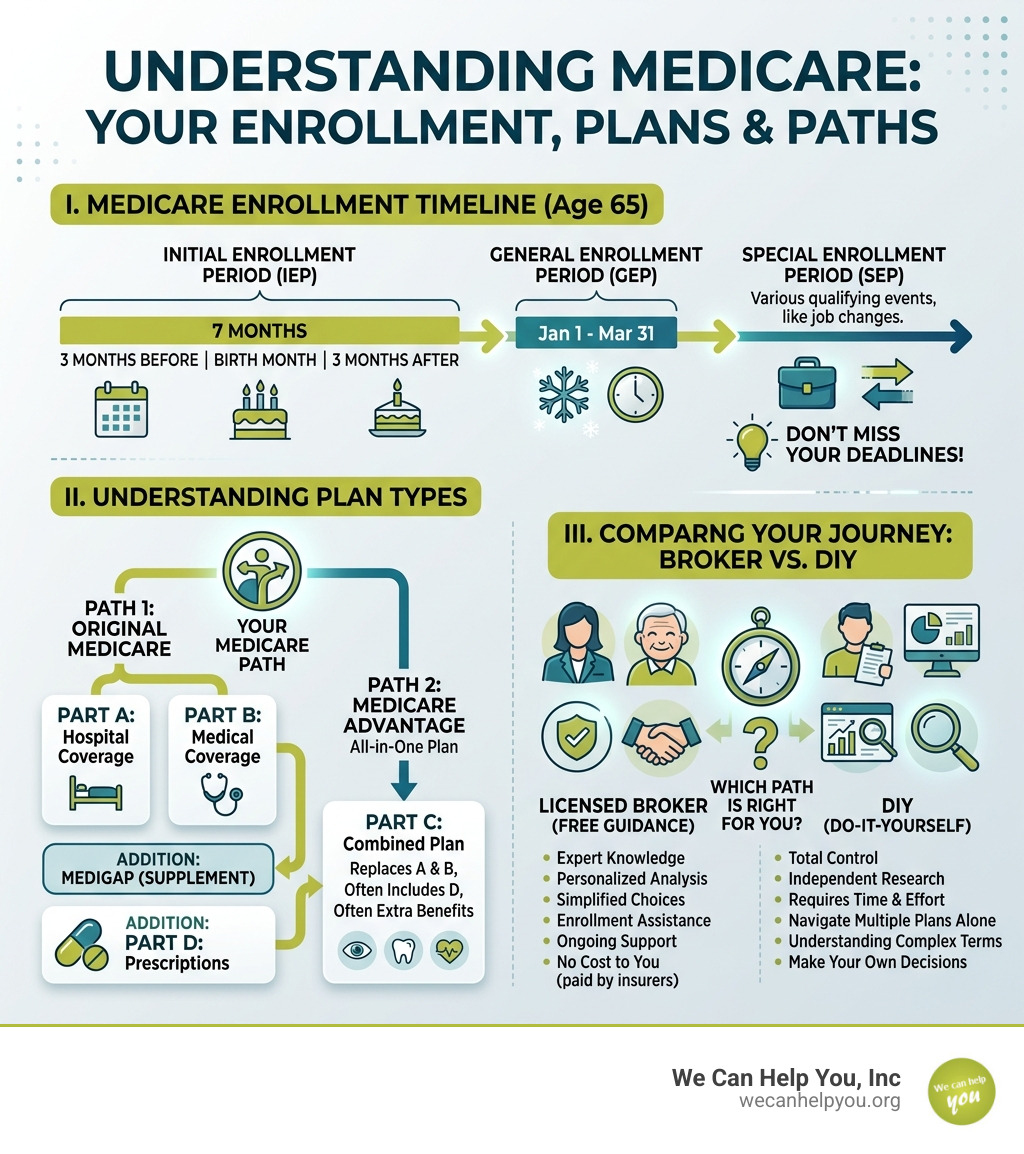
Understanding the Difference: Medicare Agent vs. Broker
When you start looking for help, you’ll hear the terms “agent” and “broker” used interchangeably, but in the insurance world, they aren’t exactly the same thing. Understanding who you are talking to is the first step in answering the question: should i use an insurance broker for medicare?
At the most basic level, an agent represents one or more insurance companies. A broker, on the other hand, technically works for the person looking for the plan (you!). However, both are licensed professionals who must pass annual exams and maintain state certifications to discuss these plans with you.
The enrollment process is where you see the biggest difference. An agent often handles the application from start to finish within their specific system. A broker acts more as a go-between, evaluating your needs across the market and then helping you navigate the enrollment with the chosen carrier. For a deeper dive into these roles, you can check out A Practical Guide To Medicare Insurance Brokers.
Comparison of Medicare Professionals
| Feature | Captive Agent | Independent Agent | Medicare Broker |
|---|---|---|---|
| Who they represent | One specific insurance company | Multiple insurance companies | The consumer (you) |
| Plan Variety | Limited to one brand | Broad (multiple brands) | Very Broad (multiple brands) |
| Cost to you | $0 | $0 | $0 |
| Primary Goal | Sell their company’s plans | Find a fit among their partners | Find the best market fit |
Captive vs. Independent Agents
If you walk into a dedicated “brand name” insurance office, you are likely speaking with a captive agent. These professionals are experts in one company’s products. While they know those plans inside and out, they cannot tell you if a competitor across the street has a better price or better coverage for your specific medications.
Independent agents are a bit more flexible. They are “appointed” by several different insurance companies. This allows them to show you a variety of plans, which significantly increases your chances of finding a good deal. We cover the nuances of these roles in our Medicare Insurance Agents Complete Guide.
The Broker Advantage
The true “Broker Advantage” lies in market knowledge and client representation. Because brokers aren’t tied to a single carrier’s sales quota, they can provide more objective advice. They act as your advocate, looking at the “big picture” of your health and finances rather than just trying to close a sale for a specific brand.
Should I Use an Insurance Broker for Medicare?

As of April 2026, the Medicare landscape is more crowded than ever. With over 40 Medicare Advantage plans and 60 Part D prescription plans available in many areas, the “DIY” method can lead to massive headaches.
If you are wondering, “should i use an insurance broker for medicare,” consider the sheer volume of data. It’s estimated that more than 10,000 Baby Boomers become eligible for Medicare every day. This creates a high demand for experts who can save you time. A broker can do in thirty minutes what might take you thirty hours of research. For more on how they work, you can read A Medicare broker can help find the best coverage for you. Here’s what to know before you hire one.
Understanding the Benefits: Should I Use an Insurance Broker for Medicare?
The benefits of using a broker go beyond just picking a plan name. They help with the “nitty-gritty” details that often cause the most financial pain:
- Preferred Doctors: A broker can cross-reference your list of doctors against multiple plan networks simultaneously.
- Prescription Drugs: They use software to input your specific medications and find the plan with the lowest “total annual cost” (premiums + co-pays).
- Medical Underwriting: If you are looking for a Medigap (Medicare Supplement) plan outside of your initial enrollment period, you may have to answer health questions. Brokers know which companies have “friendlier” underwriting for specific conditions like diabetes or heart disease.
Finding local expertise is key, and you can start by Finding The Best Local Medicare Broker For Your Needs.
Making the Right Choice: Should I Use an Insurance Broker for Medicare?
Certain situations make a broker almost essential. If you have complex health needs or are dual eligible (qualify for both Medicare and Medicaid), the rules for Special Needs Plans (SNPs) are intricate. Brokers are trained to handle these specific products.
Additionally, if you are looking to switch plans during the Annual Enrollment Period, a broker can quickly compare your current coverage against the new 2026 rates to see if you’re still getting the best deal. To find someone in your area, use our Medicare Agent Finder.
How Brokers Are Paid and Potential Risks
One of the most common questions we hear is: “If the service is free, how do they make money?”
Brokers are compensated through commissions paid directly by the insurance companies. These commissions are built into the plan’s cost, meaning you pay the exact same premium whether you sign up through a broker, online, or directly with the company. The Centers for Medicare & Medicaid Services (CMS) strictly regulates these payments to keep the playing field level. You can learn more about this structure in the article Should I Use a Medicare Advantage Broker?
Commission Structures and Bias
While the service is “free” to you, it is important to stay aware of potential biases. Historically, Medicare Advantage plans have paid higher commissions to brokers than Medicare Supplement (Medigap) plans. In some cases, the commission for a new Medicare Advantage enrollment can be three times higher than a Medigap enrollment.
This doesn’t mean every broker is biased, but it is why you should ask why they are recommending a specific path. A good broker will prioritize your needs—like your desire to see any doctor who accepts Medicare—over their own commission check.
Recent Lawsuits and Regulatory Changes
The industry isn’t without its drama. The Department of Justice (DOJ) has recently been involved in lawsuits against certain insurers and broker organizations regarding alleged illegal kickbacks. These “extra” payments were sometimes disguised as administrative fees to encourage brokers to push certain plans.
Because of this, CMS has implemented stricter transparency rules. As of 2024 and 2025, brokers are required to disclose if they do not offer all plans in a specific area. They must also record many of their sales calls to ensure they aren’t using high-pressure tactics or giving false information.
Comparing Your Options: Brokers vs. SHIP vs. DIY

If you aren’t sold on using a broker, you have two main alternatives: the State Health Insurance Assistance Program (SHIP) or the “Do It Yourself” (DIY) approach. You can read more about these different paths at Medicare Agent.
When to Use SHIP Counselors
SHIP is a federally funded program that provides free, unbiased Medicare counseling.
- Pros: They do not accept commissions, so they have zero financial incentive to lean toward one plan over another. They are excellent for objective education and helping with financial assistance programs.
- Cons: SHIP counselors generally cannot enroll you in a plan. They give you the information, and then you have to go do the paperwork yourself. Also, because they are often volunteers, they may be harder to reach during the busy open enrollment season.
The DIY Approach via Medicare.gov
The Medicare Plan Finder tool on Medicare.gov has improved significantly. You can enter your zip code, your drugs, and your pharmacies to see a list of every plan available.
- The Risk: Data accuracy. If you mistype a medication name or dosage, the results could be wildly off. Also, the website won’t tell you which companies have a reputation for denying claims or which ones have the best customer service. If you decide to go this route, our Agent Locator can still help you find a professional to “double-check” your work.
How to Find and Vet a Trusted Medicare Professional
Finding a broker is easy; finding a trusted broker takes a little more effort. You should always verify that a broker is licensed in your state. You can do this through your state’s Department of Insurance or by using the NAIC (National Association of Insurance Commissioners) locator. For more tips, see Medicare: How to Find and Work With an Insurance Broker.
Key Questions to Ask Your Broker
Before you sign anything, put your broker in the “hot seat” with these questions:
- “How many different insurance carriers do you represent?” (You want someone who works with at least 10-20+ companies).
- “Do you offer every plan available in my zip code?” (If not, ask which ones they are missing).
- “How are you compensated for this specific plan?”
- “Will you help me if I have a billing issue or a denied claim later this year?”
Knowing How To Use The Agent Finder effectively can help you screen for these qualities before you even pick up the phone.
Red Flags to Watch For
CMS has strict “marketing rules” to protect you. Run the other way if a broker:
- Calls you out of the blue: Unsolicited cold calling for Medicare Advantage or Part D is prohibited.
- Pressures you: They should never tell you that you’ll “lose your benefits” if you don’t sign up right now.
- Offers gifts over $15: Small promotional items are okay, but they cannot “buy” your business with expensive dinners or cash.
- Asks for your bank info too early: They only need this once you are actually enrolling in a plan with a premium.
Frequently Asked Questions about Medicare Brokers
Do I have to pay a fee to use a Medicare broker?
No. In the United States, Medicare brokers are paid commissions by the insurance carriers. It is actually illegal for them to charge you a fee for a standard Medicare plan consultation or enrollment.
Can a broker help me switch plans during Open Enrollment?
Yes! In fact, this is when they are most helpful. They can compare your current “Annual Notice of Change” (ANOC) against the new 2026 plans to see if your premiums are going up or if your drugs are being dropped from the formulary.
Do brokers represent every Medicare plan available in my area?
Not necessarily. Most independent brokers represent a wide variety of plans, but they may not be “appointed” with every single one. Since 2022, they are required to tell you if they don’t offer all plans in your area.
Conclusion
At the end of the day, the question of “should i use an insurance broker for medicare” comes down to your comfort level. If you enjoy spending dozens of hours reading 200-page “Evidence of Coverage” documents, you might do fine on your own. But for most of us, having a professional guide to navigate the 42+ plan choices is a sanity-saver.
At We Can Help You, Inc., our mission is to make sure you don’t just find a plan, but the right plan for your retirement. Whether you need a free Medicare Planning Guide or a Social Security maximization report, we are here to help you protect your retirement income.
Don’t go it alone. Review your plan annually, stay informed about changes in 2026, and give yourself the peace of mind you deserve. Ready to find a partner in your Medicare journey? Start with our Medicare Agent Finder today.