What You Need to Know Right Now About Help with Medicare Donut Hole
Help with Medicare donut hole costs is simpler than ever before — because the donut hole no longer exists.
Here’s the quick answer:
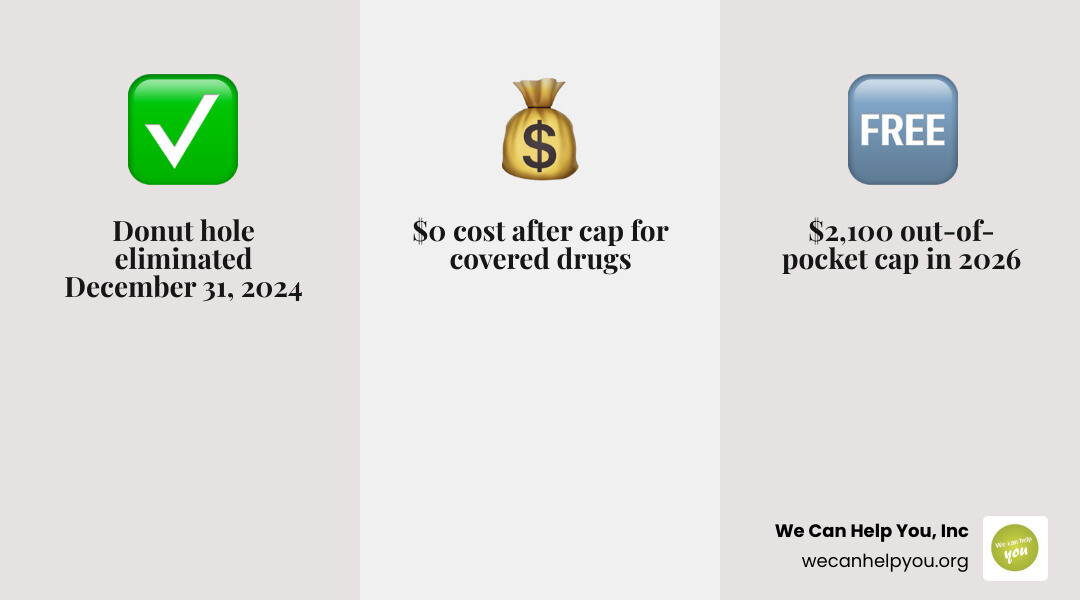
- The donut hole was officially eliminated on December 31, 2024
- Starting January 1, 2025, Medicare Part D moved to a three-phase structure: deductible, initial coverage, and catastrophic coverage
- In 2026, once you spend $2,100 out-of-pocket on covered Part D drugs, you pay $0 for the rest of the year
- The 2026 Part D deductible is capped at $615
- Extra Help (Low-Income Subsidy) can reduce costs further — with income limits of $23,940 (individual) or $32,460 (couple) in 2026
- The Medicare Prescription Payment Plan lets you spread drug costs into monthly installments
For years, Medicare beneficiaries dreaded hitting the donut hole — that frustrating gap in Part D coverage where drug costs suddenly jumped higher, sometimes forcing people to skip medications they truly needed. The Inflation Reduction Act changed all of that.
But here’s the thing: even with the donut hole gone, prescription drug costs can still feel confusing and overwhelming. The new rules, new spending caps, and assistance programs all work differently — and making a wrong move can still cost you real money.
This guide walks you through exactly where things stand in 2026, what help is available, and how to make sure you’re not paying more than you should.
Basic Help with Medicare donut hole glossary:
Help with Medicare donut hole: Understanding the 2026 Rules
If you’ve been on Medicare for a while, you probably remember the “donut hole” with about as much fondness as a root canal. Formally known as the “coverage gap,” it was a phase where, after you and your plan spent a certain amount, you were suddenly responsible for a much larger percentage of your drug costs. It was a confusing, expensive bridge between “initial coverage” and “catastrophic coverage.”
We have good news for everyone living in states like New York, Florida, Illinois, and across our service areas: the donut hole is history. As of 2025, the federal government officially closed this gap. This massive shift was made possible by the Inflation Reduction Act impact, which redesigned the Part D benefit to be more predictable and affordable for seniors.
Why does this matter? Historically, the donut hole was a major barrier to health equity. Many beneficiaries, especially those fighting chronic conditions, found themselves choosing between groceries and prescriptions once they hit the gap. Organizations like the American Cancer Society have long highlighted how these high costs impacted patient outcomes. By eliminating the gap, the system now moves you directly from your initial coverage into a capped catastrophic phase.
The evolution of Part D phases
To understand how to get Help with Medicare donut hole issues today, we have to look at how the phases have simplified. In 2024, you had four phases (Deductible, Initial Coverage, Coverage Gap/Donut Hole, and Catastrophic). In 2026, we are down to three clear stages.
| Feature | 2024 (The Old Way) | 2026 (The New Way) |
|---|---|---|
| Donut Hole | Existed after $5,030 in total costs | Eliminated |
| Out-of-Pocket Cap | None (effectively ~$8,000 TrOOP) | $2,100 Cap |
| Max Deductible | $545 | $615 |
| Catastrophic Phase | You paid 0% (starting in 2024) | You pay $0 |
This evolution means that once you hit that $2,100 out-of-pocket limit, your financial responsibility for covered drugs ends for the remainder of the calendar year.
The New $2,100 Out-of-Pocket Cap and Coverage Phases

The most significant piece of Help with Medicare donut hole relief is the hard cap on out-of-pocket spending. In 2026, this limit is set at $2,100. This isn’t just a “suggestion”—it is a legal ceiling. Once your spending on deductibles, copays, and coinsurance for covered Part D drugs hits $2,100, your plan takes over 100% of the costs.
Here is how the 2026 journey looks:
- The Deductible Phase: You pay 100% of your drug costs until you reach your plan’s deductible. In 2026, no plan can charge a deductible higher than $615. Some plans may have $0 deductibles.
- The Initial Coverage Phase: After meeting the deductible, you usually pay a 25% coinsurance or a set copay for your medications. This continues until your total out-of-pocket spending (including the deductible) reaches $2,100.
- The Catastrophic Phase: Once you cross the $2,100 threshold, you enter the home stretch. For the rest of 2026, you pay $0 for covered Part D prescriptions.
It’s important to understand the 2021 Medicare Part D Coverage Phases history to appreciate how much better this is. Previously, there was no true “cap,” and even in the catastrophic phase, some beneficiaries still had to pay small amounts. Now, the “zero” is absolute for covered drugs.
Tracking your progress toward the cap
How do you know how close you are to that $2,100 limit? You don’t have to keep a shoebox full of receipts (though keeping records is never a bad idea!).
Your Part D plan is required to send you an Explanation of Benefits (EOB) every month you use your coverage. This document tracks your “True Out-of-Pocket” (TrOOP) costs. You can also log into your plan’s member portal to see a digital dashboard of your spending.
We always recommend checking your drug cost assistance options through official Medicare channels to ensure your specific medications are on your plan’s formulary. If a drug isn’t covered by your plan, the money you spend on it won’t count toward your $2,100 cap!
How to Qualify for Extra Help and Low-Income Subsidies
Even with the $2,100 cap, paying two thousand dollars for medicine can be a massive burden for many households. This is where the Extra Help program (also known as the Low-Income Subsidy or LIS) becomes the ultimate form of Help with Medicare donut hole relief.
Extra Help is a federal program designed to assist people with limited income and resources. It can pay for your Part D premiums, lower your deductibles, and significantly reduce your copays. In fact, the annual value of this program is estimated at about $5,700 per person.
To qualify in 2026, your income and resources must fall below certain thresholds:
- Individual Income Limit: $23,940 per year.
- Married Couple Income Limit: $32,460 per year.
- Resource Limits: $18,090 for individuals and $36,100 for couples (this includes things like savings and stocks, but usually not your home or car).
If you are struggling to make ends meet, we strongly encourage you to unlock savings with Extra Help. It can turn a $100 prescription into a $5 generic copay.
Qualifying for Extra Help with Medicare donut hole expenses
Some people don’t even need to apply for Extra Help—they are enrolled automatically. You automatically qualify for Extra Help if you:
- Have full Medicaid coverage.
- Are enrolled in a Medicare Savings Program (which helps pay Part B premiums).
- Receive Supplemental Security Income (SSI).
If you aren’t in those groups but believe you meet the income limits, you can apply through the Social Security Administration. Once you have Extra Help, you are protected from the high costs that used to define the donut hole. You can also learn more about navigating Part D assistance to see if other state-specific programs might apply to you.
2026 Extra Help cost-sharing levels
For those who qualify for Extra Help in 2026, the costs are incredibly low. Instead of paying 25% coinsurance, your costs are capped at:
- $5.10 for each generic drug.
- $12.65 for each brand-name drug.
- $0 cost-sharing once you reach the $2,100 out-of-pocket threshold.
Another massive benefit of Extra Help is the Special Enrollment Period (SEP). Generally, you can only switch Medicare plans once a year during the fall. However, if you have Extra Help or are “dual eligible” (Medicare and Medicaid), you may be able to switch your drug plan once per calendar quarter during the first nine months of the year. This flexibility ensures you are always in the plan that best covers your current medications.
Utilizing the Medicare Prescription Payment Plan to Manage Costs
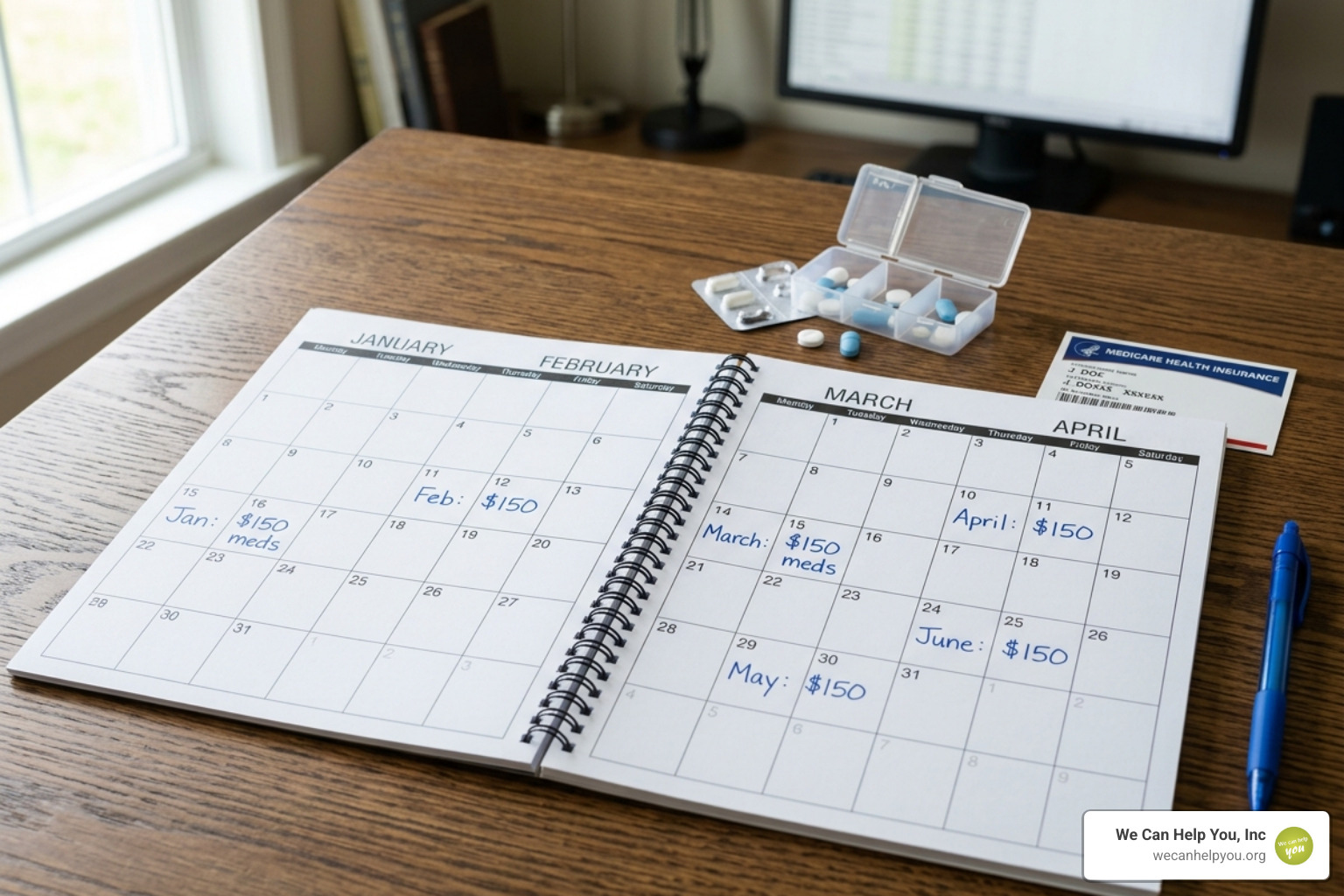
One of the newest tools for Help with Medicare donut hole management is the Medicare Prescription Payment Plan. This is a voluntary program that all Part D plans must offer starting in 2025.
It doesn’t actually reduce the total amount you pay, but it changes when you pay it. Think of it as “smoothing out” your costs. If you have an expensive drug that costs $600 in January, you might find it hard to pay that all at once. If you opt into this payment plan, your insurer will let you spread that $600 over the remaining months of the year in steady, monthly installments.
This is particularly helpful for those who hit their $2,100 cap early in the year. Instead of a massive bill in January and February followed by $0 for the rest of the year, you can pay a consistent monthly amount. You can read our deep dive into understanding the Medicare Prescription Payment Plan to see if this “smoothing” option is right for your budget.
State programs for help with Medicare donut hole costs
Beyond federal programs, many states offer State Pharmaceutical Assistance Programs (SPAPs). These programs are available in several states we serve, including New York, New Jersey, and Pennsylvania. They often work in tandem with Part D to provide an extra layer of coverage for seniors and people with disabilities.
Additionally, don’t overlook:
- Manufacturer Patient Assistance Programs: Many drug makers offer “Patient Assistance Programs” (PAPs) that provide free or low-cost brand-name drugs to those who qualify based on income.
- Biosimilars and Generics: Always ask your doctor if there is a generic or biosimilar version of your medication. These are often significantly cheaper and help you stay under the $2,100 cap longer.
- Plan Exceptions: If your plan doesn’t cover a specific drug you need, we can help you understand how to request a formulary exception.
For more ideas on reducing your pharmacy bill, check out our guide on help to pay for drugs.
Frequently Asked Questions about Medicare Drug Costs
Does the Medicare donut hole still exist in 2026?
No. The Medicare donut hole was officially retired on December 31, 2024. Starting in 2025 and continuing through 2026, Medicare Part D uses a simplified three-phase structure: the Deductible phase, the Initial Coverage phase, and the Catastrophic phase. There is no longer a “gap” where you are forced to pay a higher percentage of costs before reaching the catastrophic limit.
What happens after I spend $2,100 on drugs in 2026?
Once you reach the $2,100 out-of-pocket limit in 2026, you enter the catastrophic coverage phase. In this phase, you pay $0 for all covered Part D prescriptions for the remainder of the calendar year. This cap resets every January 1st. This only applies to drugs on your plan’s formulary; premiums and non-covered drugs do not count toward this cap.
How do I apply for the Medicare Prescription Payment Plan?
You apply directly through your Medicare Part D plan sponsor (the insurance company that provides your drug coverage). It is a voluntary “opt-in” process. You can usually sign up through the plan’s website, by calling their customer service line, or during the annual open enrollment period. It is best to opt in before the year starts if you know you have high-cost medications.
Conclusion
Navigating Medicare can feel like trying to find your way through a maze, but when it comes to Help with Medicare donut hole costs, the news is overwhelmingly positive. The elimination of the coverage gap and the introduction of the $2,100 out-of-pocket cap represent the biggest win for seniors’ wallets in decades.
However, “simpler” doesn’t mean “automatic.” You still need to ensure your drugs are on your plan’s formulary, check if you qualify for Extra Help, and decide if the new monthly payment plan fits your lifestyle.
At We Can Help You, Inc., we are dedicated to making sure you don’t leave money on the table during retirement. Whether you need a free Medicare Planning Guide to understand your options or a Social Security maximization report to boost your monthly income, we are here to support you. We serve beneficiaries across the country, from the deserts of New Mexico to the shores of New Jersey.
Don’t guess when it comes to your healthcare. If you’re feeling stuck, reach out to a SHIP counselor or call 1-800-MEDICARE for personalized assistance. And for more expert tips on managing your prescriptions, explore our full library of Medicare Part D services.
Your retirement should be about enjoying your time, not stressing over the pharmacy counter. Let’s make sure you have the coverage you deserve!