
Maximizing Your Health with Medicare’s Preventive Services
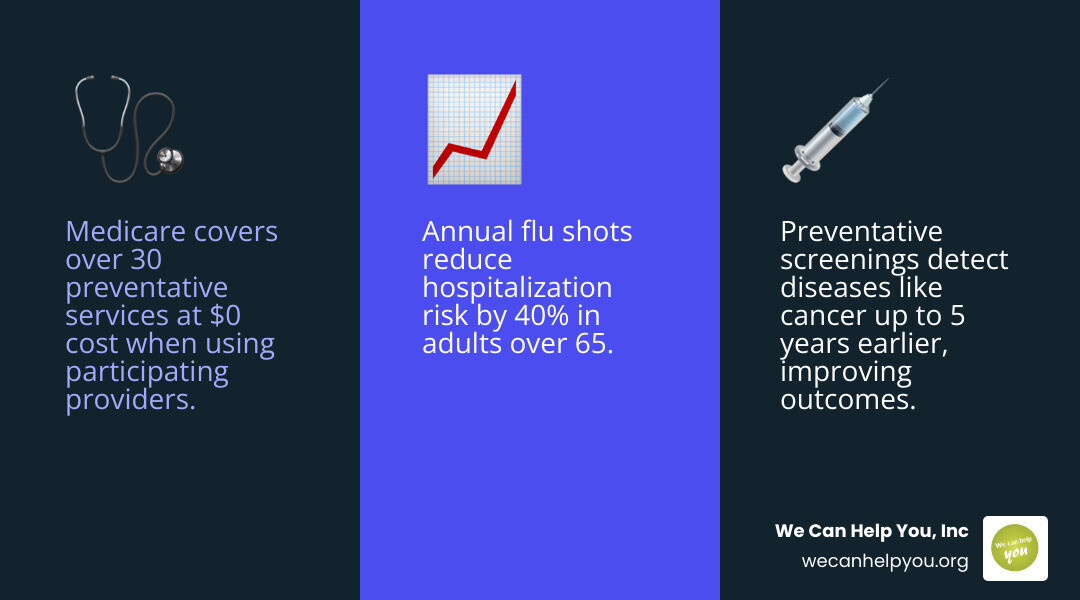
Medicare preventative services are covered benefits designed to keep you healthy and spot potential health problems early.
- They include important exams, vaccinations, health screenings, health monitoring programs, and counseling.
- The main goal is to prevent illnesses or find them early when treatments work best.
- Many of these services come with no out-of-pocket cost if your doctor accepts Medicare assignment.
- These benefits are mainly covered under Medicare Part B, and Medicare Advantage plans must also cover them.
Navigating Medicare can feel complicated, especially when you want to make sure you’re getting all the benefits you deserve. But understanding your Medicare preventative services is a key step to protecting your health as you approach or enter retirement. These services are more than just check-ups; they are essential tools Medicare provides to help you maintain your well-being and live a healthier life without added financial stress. This guide from We Can Help You, Inc. will break down everything you need to know, making it simple to understand and use these valuable benefits.
Understanding Medicare Preventative Services and Their Importance
When we talk about medicare preventative services, we are referring to the proactive side of healthcare. Most of us are used to visiting the doctor when something already hurts. However, Medicare Part B (Medical Insurance) is designed to help us stay ahead of the curve. By utilizing these services, we can often catch chronic conditions like diabetes or heart disease before they become serious emergencies.
The importance of these services cannot be overstated. According to the U.S. Surgeon General, simple actions like quitting tobacco can significantly lower the risk of disease, even for those of us who have smoked for decades. Medicare makes this easier by covering counseling and screenings at little to no cost.
To get the most out of these benefits, it is vital to see providers who “accept assignment.” This is a fancy way of saying the doctor agrees to be paid directly by Medicare and won’t charge you more than the Medicare-approved amount. When you see a participating provider, many of these services are completely free—meaning no deductible and no coinsurance. You can learn more about how to Stay Healthy For Free With Medicare Preventative Care/ through our detailed resources.
Coverage Guide: $0 Cost Screenings and Eligibility
Most medicare preventative services are covered at 100% of the Medicare-approved amount. This is largely thanks to the Affordable Care Act and recommendations from the U.S. Preventive Services Task Force (USPSTF). If a service has a Grade A or B recommendation, Medicare generally covers it without asking you to open your wallet, provided you meet the eligibility criteria.
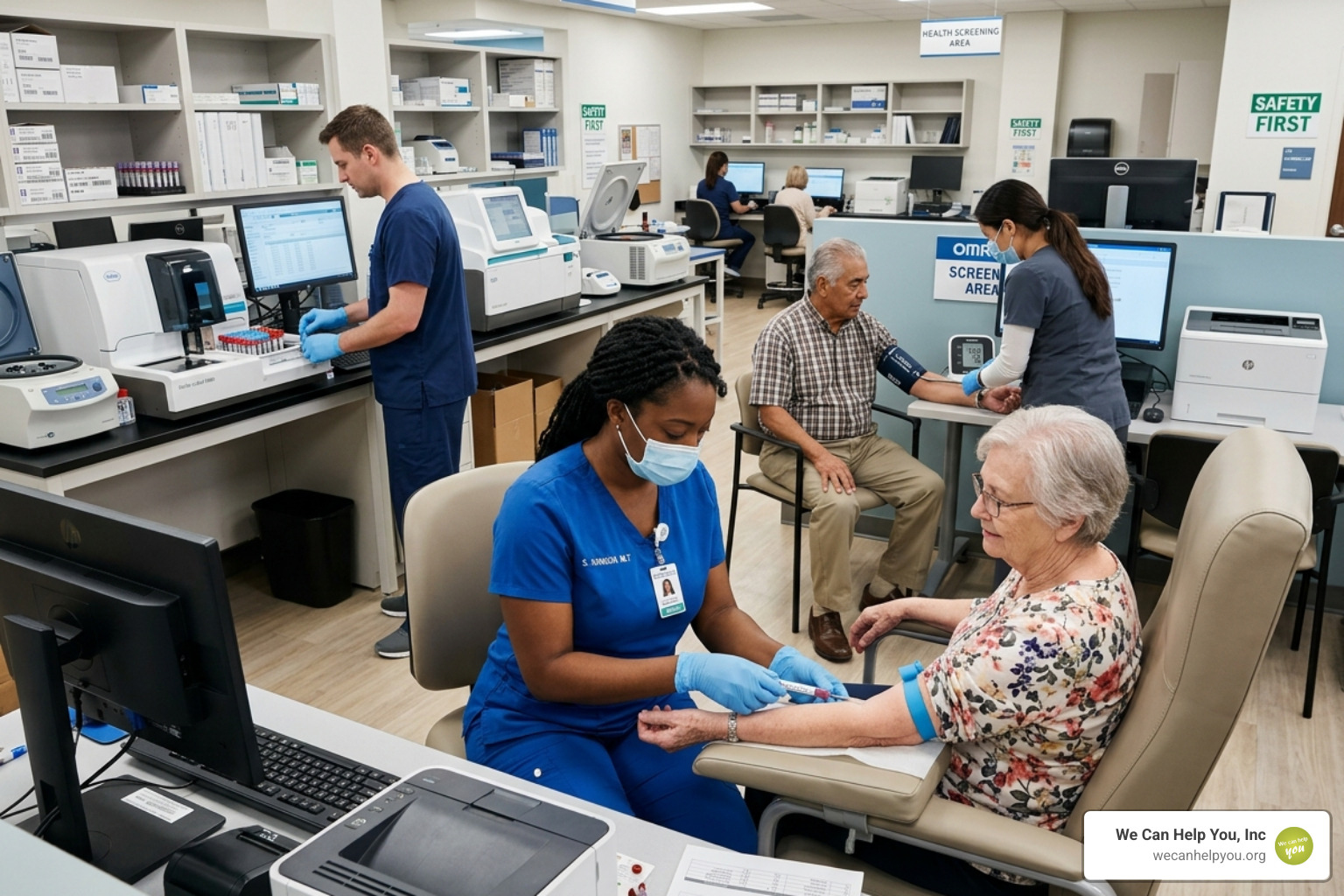
However, “free” doesn’t mean “anytime you want.” Medicare has strict rules about how often you can receive certain tests. For example, while a flu shot is covered every season, a screening for cardiovascular disease is typically only covered once every five years.
Key Screening Frequencies and Requirements
| Service | Frequency | Eligibility Highlights |
|---|---|---|
| Mammogram (Screening) | Once every 12 months | Women aged 40+ |
| Colonoscopy | Every 10 years (Avg risk) | No minimum age; 24 months for high risk |
| Lung Cancer Screening | Once per year | Ages 50–77; 20+ pack-year history |
| Diabetes Screening | Up to 2 per year | Based on risk factors like BMI or high BP |
| Depression Screening | Once per year | Must be in a primary care setting |
| HIV Screening | Once per year | Ages 15–65 (or at increased risk) |
To ensure you aren’t hit with a surprise bill, always check the Preventive and screening services list on the official Medicare site or log into your secure Medicare account to see which services you are currently eligible for.
Common Medicare Preventative Services for Cancer and Chronic Disease
We often hear that “knowledge is power,” and in Medicare, that knowledge comes from regular screenings. We want to make sure you understand the specifics of the most common screenings:
- Breast Cancer Screenings: Medicare covers one baseline mammogram for women between ages 35–39. Once you reach age 40, you are eligible for a screening mammogram every 12 months.
- Colorectal Cancer Screenings: This is a big one. Medicare recently updated its guidelines to cover most screenings starting at age 45. This includes multi-target stool DNA tests (like Cologuard) every three years and screening colonoscopies every 10 years (or every 2 years if you are considered high risk).
- Lung Cancer Screenings: If you are between 50 and 77 and have a history of smoking at least 20 “pack years” (for example, one pack a day for 20 years), Medicare covers an annual Low Dose Computed Tomography (LDCT) scan.
- Diabetes Screenings: If you have high blood pressure, a history of abnormal cholesterol, or are overweight, you may qualify for up to two free screenings per year.
Understanding these benefits is a Crucial Component Of Health Care/ because it allows you to take charge of your medical future.
Vaccines and Immunization Schedules
Vaccines are some of the most effective medicare preventative services available. In most cases, you won’t pay a dime for the following:
- Flu Shots: Covered once per flu season. Interestingly, if the timing of the seasons falls just right, you might actually get two covered shots in one calendar year!
- Pneumococcal Shots: These help prevent pneumonia. Most people only need one in their lifetime, but your doctor might recommend a second shot depending on your health status.
- Hepatitis B Shots: These are covered for those at medium or high risk for the virus.
- COVID-19 Vaccines: These remain covered at no cost to you.
For more technical details on how these are processed, you can view the Preventive Services | CMS resource page.
Comparing Wellness Visits and Medicare Advantage Rules
There is often a lot of confusion regarding the “Welcome to Medicare” visit versus the “Yearly Wellness” visit. Let us clear that up: neither of these is a traditional, “head-to-toe” physical exam where the doctor pokes and prods every inch of you. Instead, they are “planning” visits.
- Welcome to Medicare Visit: This is a one-time “Initial Preventive Physical Examination” (IPPE). You must receive it within the first 12 months of signing up for Medicare Part B. The doctor will review your medical and social history and give you a “road map” for the preventative services you’ll need.
- Yearly Wellness Visit (AWV): Once you’ve had Part B for longer than 12 months, you get one of these every year. The focus is on creating or updating a personalized prevention plan based on your current health and risk factors.
If you have a Medicare Advantage plan (Part C), the rules are slightly different. These plans must cover the same $0 preventative services as Original Medicare, but they often require you to stay “in-network.” If you go to an out-of-network doctor for a wellness visit, your plan might charge you the full cost. On the bright side, many Advantage plans offer extra perks, like gym memberships or vision exams, that go Beyond The Physical Unpacking Your Medicare Wellness Checkup/.
Maximizing Your Medicare Preventative Services Through Annual Visits
During your Yearly Wellness visit, we recommend being very open with your provider. This visit is your time to discuss:
- Health Risk Assessment: A questionnaire you fill out before or during the visit.
- Cognitive Impairment: The doctor will look for signs of Alzheimer’s or dementia.
- Depression Screening: A quick check on your mental well-being.
- Substance Use: A review of alcohol or tobacco use to see if counseling is needed.
- Telehealth Options: Many of these counseling sessions and follow-ups can now be done via telehealth, which is a convenient update to Medicare’s rules.
How to Avoid Unexpected Costs During Preventative Care
This is the section where we save you money. The most common “gotcha” in Medicare occurs when a service starts as “preventative” but turns “diagnostic.”
Preventative means you have no symptoms and are just checking. Diagnostic means the doctor is investigating a known problem or a symptom you mentioned.
For example, if you go in for a free screening colonoscopy and the doctor finds and removes a polyp, that procedure may suddenly become diagnostic. While the Part B deductible usually won’t apply to the colonoscopy itself, you might be responsible for a 15% coinsurance for the doctor’s services and the facility fee.
Another common cost is the “facility fee.” If you get your medicare preventative services at a hospital-owned clinic instead of a private doctor’s office, the hospital might charge a separate fee that Medicare doesn’t fully cover.
Always ask your doctor: “Is this service preventative or diagnostic?” and “Will there be any additional facility fees?” Understanding this Difference Between Preventative And Diagnostic Medical Procedures/ is the best way to keep your healthcare budget on track.
Frequently Asked Questions about Preventative Care
Which preventative services require cost-sharing?
Not everything is free. Some services require you to meet your Part B deductible and pay a 20% coinsurance. These include:
- Glaucoma screenings: Covered once every 12 months for high-risk individuals.
- Diabetes Self-Management Training: Helps you learn to manage your diet and medications.
- Barium Enemas: Sometimes used instead of a colonoscopy.
- Digital Rectal Exams: Used for prostate cancer screening (though the PSA blood test is usually free).
How do Medicare Advantage plans handle preventative care?
As long as you use an in-network provider, your cost-sharing for USPSTF-recommended services must be zero. However, Advantage plans have their own rules for referrals and prior authorizations. Always call your plan provider before scheduling a screening to ensure you are following their specific protocol.
Who qualifies as “at risk” for specific screenings?
Medicare uses specific definitions for “at risk”:
- Abdominal Aortic Aneurysm (AAA): You are at risk if you have a family history or are a man aged 65–75 who has smoked at least 100 cigarettes in your lifetime.
- Hepatitis B: Risk factors include living with someone who has HBV, being a healthcare worker, or having ESRD.
- Bone Mass Measurements: Usually covered for estrogen-deficient women, people with X-rays showing osteoporosis, or those on long-term steroid medications (like prednisone).
- HIV: Increased risk includes having new sexual partners or a history of other STIs.
Conclusion
At We Can Help You, Inc., we believe that a healthy retirement is built on a foundation of education. Knowing which medicare preventative services are available to you—and how to get them for free—can save you thousands of dollars in future medical costs and provide invaluable peace of mind.
Our mission is to help you navigate the complexities of Medicare and Social Security. Whether you are living in sunny Florida, the mountains of Colorado, or right here in East Greenwich, RI, our team is dedicated to your financial and physical well-being. We invite you to take advantage of our free Medicare Planning Guide and our free Social Security maximization report to ensure you are making the most of your hard-earned benefits.
For more information on staying healthy and maximizing your coverage, please explore our other resources or contact us directly. We are here to help you every step of the way!